.png)


Ultra-Processed Food Addiction Recovery: How to Stop Cravings and Find Real Relief with Real Food

“What’s Wrong With Me?” The Hidden Struggle Behind Cravings
You wake up already exhausted, reaching for caffeine before your feet hit the floor. By mid-morning, you’re longing for something sweet, and by afternoon, your energy crashes. You tell yourself today will be different, but somehow you’re caught in the same cycle. Chasing relief in sugar or ultra-processed foods, only to end the day feeling foggy, ashamed, and frustrated.
If this sounds painfully familiar, I see you. I’ve lived it. For years, I felt consumed by an endless cycle of cravings, sugar binges, and mental noise around food. The shame was overwhelming. I told myself I just needed more willpower. But the truth isn’t that simple, and you are not broken.
Why “Willpower” Isn’t Enough: Reframing Food Addiction Recovery
For much of my life, I survived on what I called the “dessert diet”. I was constantly seeking sugar, riding highs and crashes, mapping my days around getting my next fix. When menopause hit, I knew things had to change. My body could no longer cope, and my mind was filled with anxiety, self-judgment, and relentless cravings.
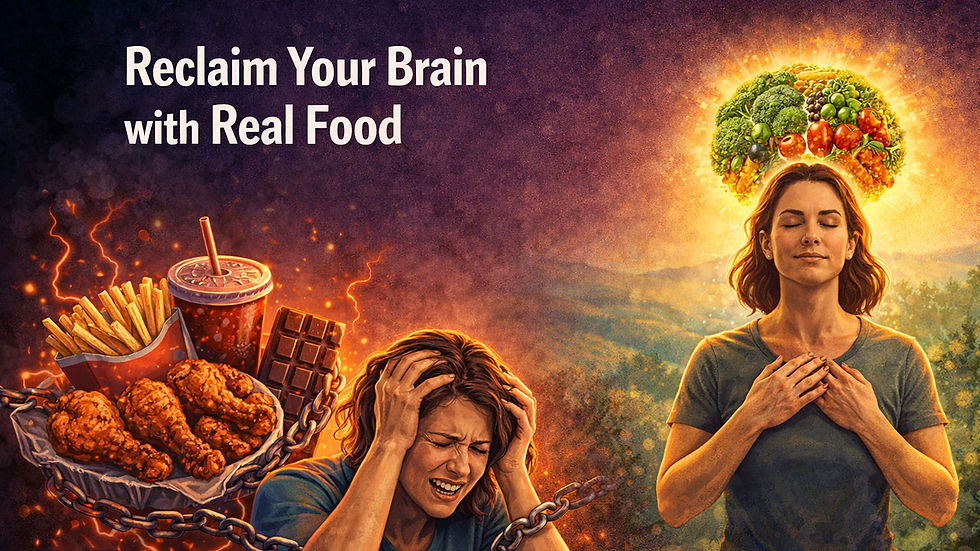
What I eventually learned and what changed everything was that ultra-processed food addiction isn’t about character flaws or lack of discipline. It’s a biological hijacking of the brain and nervous system. Most women struggling with how to stop cravings or break sugar addiction are fighting a battle that food engineering has stacked against them.
Ultra-Processed Foods: Engineered for Addiction
Today, nearly 70% of the calories many Americans consume come from ultra-processed foods. These are items purposefully designed in labs to hit that “bliss point,” a seductive balance of sugar, fat, and salt. These foods don’t just taste good, they intentionally override the body's natural signals of hunger, fullness, and satisfaction.
Our brains evolved to help us survive famine, not to resist the pull of a multi-billion-dollar food industry that manipulates our impulses. That means when you “fail” another diet, it’s not a failure of willpower. It’s biology acting exactly as it should in an unnatural environment.
What’s Happening in Your Brain: Simple Science, Big Impact
If you’ve wondered why your cravings feel so powerful or why everything feels so much harder when you try to break free from sugar, here’s what’s going on:
1. Dopamine Hijack and Craving Cycles
Ultra-processed foods light up your dopamine pathways. The same reward circuits involved in substance addiction. Your brain gets a surge of pleasure and “relief,” so it keeps scanning for the next fix. The cost? Constant cravings, impulsive eating and a cycle of relief and regret.
2. Blood Sugar Swings and Stress
Refined sugars and processed foods cause intense blood sugar spikes and crashes. Each rise triggers a rush of insulin, and the crash that follows sets your stress hormones on high. You end up in a survival mode where your body’s only priority is finding another fast source of comfort, usually more sugar or junk food.
3. Inflammation and Foggy Thinking
Chronic consumption of processed foods creates inflammation that disrupts brain signaling and mood regulation. Appetite cues become scrambled, mental clarity suffers, anxiety increases, and you start to question your own self-control.
4. The Nervous System in Survival Mode
When your nervous system doesn’t feel safe, whether from stress, lack of sleep, or emotional pain, it reaches for the quickest comfort possible. These foods give you just that, even as they keep the cycle going.
Preparation Is Power: How Structure Soothes Cravings
One revelation that transformed my own food addiction recovery came with the realization that chaos fuels cravings and preparation creates calm.
Think of food noise: the constant questions in your head about what to eat, when to eat, and whether there will be enough. That uncertainty builds anxiety, nudging your nervous system back toward quick-fix foods.
But when you plan and prep real, nourishing meals ahead of time before the crash hits, you make it easier to support your body, not sabotage it.
Simple strategies:
Plan tomorrow’s meals the night before (don’t wait until you’re hungry or frazzled).
Prep a few easy protein-rich and produce-based options you can trust.
Keep your environment stocked with foods that support stability, not chaos.
The relief comes not just from eating better, but from finally giving your nervous system what it needs most: a sense of predictable safety.
Stories of Real Change: It’s Not Just About Food
True food addiction recovery is not about “never eating sugar again.” It’s about learning how to hear and answer, the needs beneath your cravings.
One woman I worked with used to finish her workday wolfing down cookies in the parking lot, not because she wanted them, but because her stressed-out, sleep-deprived brain was desperate for relief. When she shifted to real foods, her cravings slowly quieted, her shame melted away, and she finally stopped reaching for cookies just to survive the day.
Another friend described her mind as “static on a radio”, anxious, distracted, and perpetually depleted. Once she started feeding her body real single-ingredient foods, her mind cleared, her moods softened, and she realized her “motivation problem” was actually a biology problem. The cravings lost their grip because her nervous system finally found calm.
Here’s what those stories prove:
Cravings are not a character flaw.
Your biology reacts to food, stress, and environment.
Real nourishment calms more than your appetite, it restores your whole self.
How to Start This Week: Calm the Cycle, One Simple Step at a Time
Feeling stuck is part of the process, but healing starts with one step. Here’s how to begin breaking sugar addiction and supporting food recovery in a way that actually works:
1. Make Your Next Plate Real. Focus on single-ingredient foods. Think eggs, vegetables, lean proteins, nuts, fruits. Real food stabilizes blood sugar and signals safety to your brain.
2. Prep Ahead for Tomorrow. Tonight, set aside a few minutes to plan what you’ll eat tomorrow. Lay out breakfast and snacks, or batch-cook proteins and veggies. The less you have to decide under stress, the steadier you’ll feel.
3. Prioritize Sleep Over Restriction. A tired brain is a craving brain! Just one more hour of rest gives your body resilience and minimizes the crash-urge for sugar or processed comfort.
4. Observe Without Shame. Notice when your cravings or binges come up. Are you tired? Stressed? Sad? Instead of punishing yourself, gently get curious: what does your body (and heart) need right now?
5. Celebrate Tiny Wins. Every meal you choose real food and every moment you show yourself compassion is a victory. Recovery is about consistency, not perfection. Progress happens in small, quiet steps.
Ready to Take Your First Step?
If you want real food addiction recovery, not more diet culture, try verbal grounding for one day. Notice your body, name your feelings, speak your truth, and give yourself permission to be exactly where you are.
If you’re craving more support, join our email community or explore Real Food Recovery group coaching. You deserve practical, compassionate tools and a space where your voice is heard.
You are not alone. You are not powerless. You are worthy of recovery.
For more information on Real Food Recovery click HERE for information on our Membership, Classes and Coaching.


Comments